In the digital age, how does art evolve?
1. Video & New Media: New Forms of Art
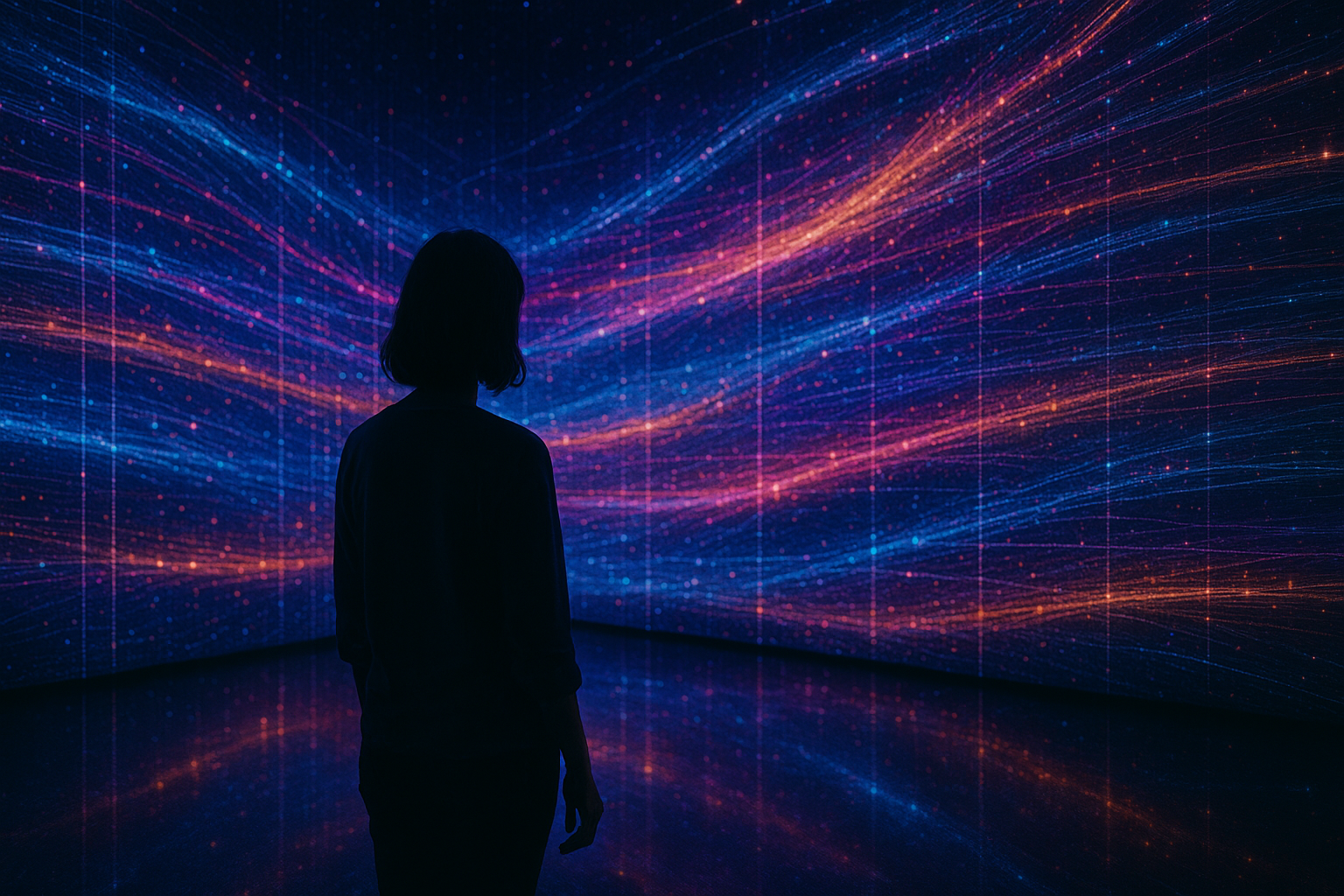
Video and new media art go beyond traditional mediums, using time, interaction, and technology as core materials in contemporary art. From screen-based video, projections, VR, sensor-based installations, to algorithmic art, this genre thrives on constant motion and participation.
2. What Do We Appreciate in Video Art?
While painting shows a still image, video art unfolds through the flow of time. Viewers follow the narrative through scene transitions, sound, text, and editing rhythm, often experiencing emotional tension or reflection.
- Is the video linear or looped in structure?
- How does the camera portray people, spaces, or events?
- What kind of emotion does the sound and music evoke?
3. What Sets New Media Art Apart?
New media art utilizes digital technology, data, algorithms, and networks as its core elements. Audience participation, real-time interaction, and interface design all play a role in shaping both the work and the viewing experience.
- What messages are conveyed through sensor-based interaction?
- Is the artwork fixed or dynamically generated with each experience?
- Is technology just a tool—or is it the art itself?
4. Notable Artists
- Nam June Paik: Pioneer of video art, known for combining TVs and electronics to explore human-technology relationships
- Bill Viola: Known for slow-motion video and deep themes that evoke meditative experiences
- Rafael Lozano-Hemmer: Interactive installations involving audience participation and technological connectivity
- Tim Hawkinson: Famous for mechanical structures and self-operating systems in art
5. Exhibition Viewing Tips
- Check the total runtime of video works beforehand and manage your viewing time accordingly.
- If sound is involved, pay attention to the acoustics of the space.
- For interactive works, observe how you yourself respond and engage—it’s part of the experience.
- Focus on the artist’s intention, not just the technology. Technology is the medium, not the message itself.
6. Recommended Works
- Nam June Paik, “TV Buddha” – A dialogue between a Buddha statue and a television in mutual gaze
- Bill Viola, “The Crossing” – Fire and water symbolizing spiritual transcendence
- Rafael Lozano-Hemmer, “Pulse Room” – Lightbulbs blinking in sync with participants’ heartbeats
- Im Heung-soon, “Factory Complex” – Social critique through documentary video and installation
Artes Gallery | 아르테스갤러리
Art for Every Soul
artesgallery.com
7. Experiencing Art Through Movement and Participation
Video and new media art invite the viewer to become more than a spectator—they become co-creators. Through new technologies, sensory inputs, and modes of participation, the boundaries of art expand. Even the screen in front of you now can become an artistic space. Next Article: “Architecture and Design: Understanding Everyday Spaces as Art”
'Genres' 카테고리의 다른 글
| Architecture and Design: Reading Everyday Spaces as Art (0) | 2025.08.06 |
|---|---|
| Stories in Space: The Message of Installation Art (0) | 2025.08.04 |
| The Art of the Moment: Why Is Photography Art? (0) | 2025.08.04 |
| From Two Dimensions to Three: Opening the Door to Sculpture Appreciation (0) | 2025.08.02 |
| Developing an Eye for Reading Paintings (0) | 2025.08.02 |


